
The Emergency Medical Technician (EMT) licence issued by the Dubai Corporation for Ambulance Services (DCAS) is an official professional authorization that allows qualified emergency care providers to work legally in Dubai’s ambulance services system. This licence ensures that professionals are properly trained, verified, and competent to deliver critical pre-hospital care across emergency and non-emergency scenarios throughout the emirate.
An EMT licence is a fundamental requirement if you plan to work as an ambulance professional in Dubai or pursue careers such as paramedic, advanced paramedic, instructor, or medical dispatcher. Applying for this licence involves careful documentation, verification, and compliance with DCAS regulations. FACTS Transcripts breaks down the entire process into clear steps so you know exactly what to expect and how to prepare.
What Is the DCAS EMT Licence?
The DCAS EMT licence is a professional healthcare licence granted by the Ambulance Regulation Services division of the Dubai Corporation for Ambulance Services. It certifies that the applicant has met the standards necessary to deliver emergency medical services — particularly at the EMT level — in Dubai’s ambulance workforce.
Unlike general healthcare licences issued by other authorities such as the Dubai Health Authority (DHA), the DCAS licence specifically governs ambulance service professionals, including EMTs, paramedics, advanced care providers, and instructors specialising in emergency medical response.
Holding this licence allows you to work across a range of roles within ambulance services, providing vital care in emergency and urgent situations and supporting patient transport between medical facilities.
Professional Roles Covered by DCAS Licensing
A DCAS licence covers a number of roles in the ambulance services domain, including:
-
Emergency Medical Technician (EMT)
-
Paramedic
-
Advanced Paramedic
-
Air and Marine Paramedic
-
First Aid and Advanced Life Support Instructor
-
Medical Dispatcher
This licence essentially confirms that you can practise within any of these categories once you meet the specific training and experience requirements defined by DCAS.
Application Process: Step-by-Step
Applying for a DCAS EMT licence involves several sequential actions, beginning with document preparation and ending with licence issuance. Below is a detailed breakdown of the full application process.
1. Prepare Your Documentation
Before you start the application, gather all necessary documents. These generally include:
-
Certified copies of academic certificates related to emergency medical training (such as EMS diploma or equivalent qualifications).
-
Professional registration or licence from your home country or a recognised authority.
-
Evidence of clinical work experience in emergency care or ambulance operations.
-
A good standing certificate from your current or most recent employer or professional regulator.
-
Experience certificates detailing your exact field duties and dates of service.
-
Prometric examination result or confirmation of examination eligibility (for medic titles).
-
Copy of passport with valid residency visa.
-
Medical malpractice insurance if required by your professional category (e.g., paramedics).
Some categories may also require records of theoretical and practical training hours completed as part of your certification.
Ensuring that your certificates are properly attested and authenticated prior to application will help prevent rejections or requests for more information.
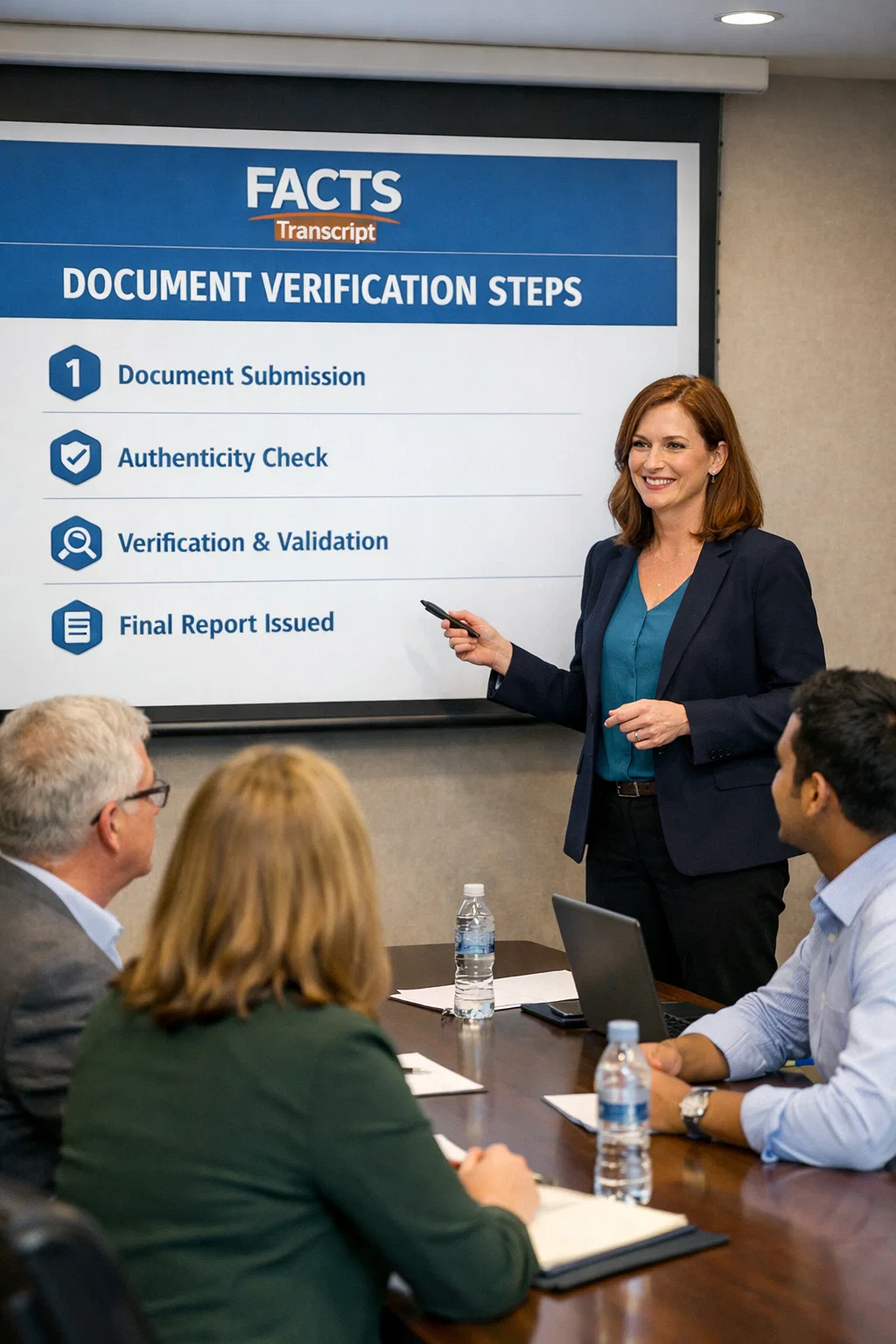
2. Data Verification Through a Recognised Service
DCAS requires applicants to have their educational and professional credentials verified through an accredited source verification service. This step is designed to ensure that all academic qualifications, licences, and experience claims are genuine and internationally recognised. Partnered verification agencies (like DataFlow Group) verify your documents directly with issuing institutions and professional regulators.
The verification typically includes:
-
Checking the authenticity of your academic degrees.
-
Confirming professional registration and good standing.
-
Validating employment and clinical experience.
Verification can take time, so plan accordingly before you formally submit your application.
3. Prometric Examination (if Required)
For certain professional categories (including medics and advanced practitioners), DCAS mandates that applicants take and pass an examination managed through the Prometric testing network. This exam assesses your clinical knowledge and competency in emergency care principles relevant to ambulance services.
Scheduling the exam early in your application process is recommended since exam results are part of the eligibility requirements for licence approval.
4. Submit Application Through DCAS Online Portal
Once your documents are prepared and verified, and exam results are in hand if necessary, you will proceed to submit your application through the DCAS e-Services platform. This involves:
-
Filling in your personal and professional details in the online form.
-
Uploading all required documents as per the checklist.
-
Paying applicable service and licensing fees.
-
Completing all sections of the application before submission.
DCAS reviews the application and may contact you if additional documents are required.
5. Pay Service and Issuance Fees
DCAS charges specific fees depending on the category of licence you are applying for. Typical fee categories include:
-
License application fee (standard across categories).
-
EMT licence issuance fee (with options for standard or urgent processing).
-
Additional fees for higher categories such as paramedics or advanced instructors.
-
Knowledge and innovation fees levied by the authority.
Paying these fees is an essential step to activate your application for review by the Ambulance Regulation Services.
6. Application Review and Final Assessment
After submission, DCAS evaluates your application based on the submitted documentation, verification reports, exam results, and overall fulfilment of requirements. This assessment may include:
-
Administrative review.
-
Technical competency checks.
-
Requests for clarifications or supplementary documents if needed.
This stage is critical, as it determines whether you meet all professional standards to receive the EMT licence.
7. Licence Issuance
Once all criteria are met and DCAS approves your application, the licence is issued electronically. You can download or print your licence, which is recognised as an official professional credential that authorises you to work within DCAS-regulated ambulance services in Dubai.
You must ensure your contact information and licence details are kept up to date, and you may need to renew the licence periodically to maintain validity.
Key Requirements Explained
Academic Qualifications
Your academic credentials should demonstrate a recognised level of emergency medical training — such as an EMS diploma, advanced life support certificate, or comparable qualification. These must be properly attested and verifiable.
Clinical Experience
DCAS typically requires at least one to two years of clinical experience in emergency services, ambulance operation, intensive care, or similar settings, depending on the professional category you are seeking. Experience should be documented through formal work letters and employment records.
Prometric and Training Certificates
Completing foundational certification such as Basic Life Support (BLS) and trauma care training (like PHTLS or ITLS) strengthens your application and may be required for both EMT licences and higher paramedic categories.
Tips for a Successful Application
Here are some practical suggestions to make your DCAS EMT application smoother:
-
Start your document verification early, especially if you are outside the UAE. Verification through services like DataFlow can take several weeks.
-
Make sure all attestations and legal verifications are complete before uploading your certificates. Incomplete or improperly attested documents are common reasons for rejection.
-
Schedule your Prometric exam at a centre near you or in a region where you can take it conveniently.
-
Keep translations ready if any documents are not in English or Arabic — accurate translation is often required.
Final Thoughts
Obtaining an Emergency Medical Technician licence from the Dubai Corporation for Ambulance Services is a structured and detailed process designed to ensure that emergency care professionals are fully qualified. By preparing your documentation, meeting clinical experience criteria, completing necessary exams, and providing all verification reports, you position yourself for successful licensure in one of the world’s most advanced ambulance systems.
FACTS Transcripts supports professionals throughout this journey by helping evaluate and organise academic credentials, manage document preparation and verification, and ensure that your application package meets DCAS requirements confidently. If you are planning to apply for a DCAS licence, start early, follow each step diligently, and prepare your documentation thoroughly to avoid delays.
FACTS Transcripts proudly serves students and professionals across a wide range of regions to support their academic and career goals. Our services are available in:
- India
- United States
- Canada
- United Kingdom
- New Zealand
- Australia
- Russia
- Middle East
- North America
- Africa
Our Services – FACTS Transcripts
We at FACTS Transcripts assist in various services, including:
- Mark Sheet Transcripts
- E-Transcripts
- Duplicate Mark Sheets & Degree Certificates
- Medium of Instructions Certificates
- Attestations
- HRD Attestation / Apostille Services
- ECA (Educational Credentials Assessment)
Trusted by leading global verification organizations, including WES, IQAS, PEBC, NDEB, NASBA, CAPR, NZQA, ICAS, NCESS, ICES, ECE, eduPASS, ACEI, GCEUS, Comparative Education Services, NNAS, NCA, SAQA, QMAS, FORAC, Australian Pharmacy Council, and more.
FACTS Transcripts – The preferred choice for university document verification worldwide. We ensure a hassle-free process for obtaining your transcripts.